I took photos for this week’s Sunday Times Culture magazine, to accompany an interview by Eithne Shortall.
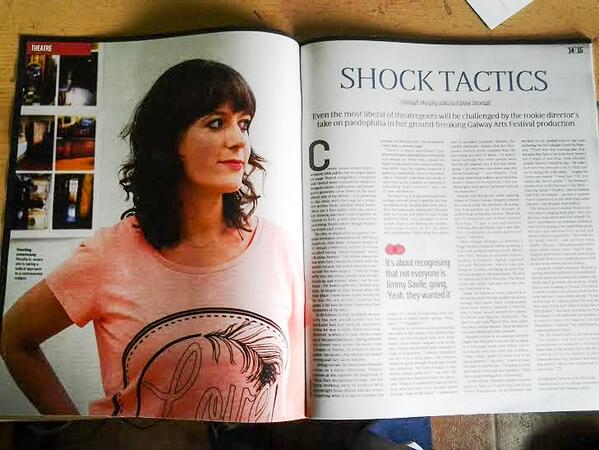
I took photos for this week’s Sunday Times Culture magazine, to accompany an interview by Eithne Shortall.
My interview with former Rwandan genocidaires translated into French.
Translated into Dutch for VICE NL.

Editor’s note: All names have been changed.
At the entrance to Nyarugenge Prison in Kigali, Rwanda, armed guards stand beside painted letters that read, “No Corruption.” Through the gates, I spot guards escorting inmates around. Prisoners wear pink if they are awaiting a sentence, and orange if they are serving one.
During the three-month long Rwandan Genocide 20 years ago, 800,000 Tutsis and moderate Hutus died at the hands of their friends, neighbors, and colleagues. After the catastrophe ended, a huge amount of people needed to be prosecuted, but there were limited resources to conduct the trials. To speed up the prosecution procedure, a system of local justice called gacaca courts was brought in. Trials were held in villages, where victims and their families publicly confronted the accused before their communities.

Twenty years after the Rwandan genocide, the country is still coming to terms with what took place during that period of extreme violence. Perpetrators are still being brought to justice, and heroic stories are still emerging.
One such story belongs to Zula Karuhimbi, a woman some Rwandans claim saved more than 100 people through “sorcery.”
After we learned that she lived in the southern Ruhango District, we drove from Kigali to find her. On the way, we stopped at a roadside restaurant, where we told the waiter we were searching for the “witch” who had saved lives during the genocide. “The witch who was honored by the government?” a customer asked. “I know where she lives. I’ll take you to her.”
He brought us to Musamo Village, where we abandoned our car and ploughed by foot through waist-high shrubbery. Turning into an enclosure, we found Karuhimbi asleep on a straw mat outside a tiny house. She was hugging a small child, who, we later discovered, was an orphaned boy she had recently adopted.

Tutsi refugees in Kabgayi in May 1994: RTLM radio told listeners not to take pity on women and children. Photograph: Alexander Joe/AFP/Getty Images
The media put a stop to that. One of the most notorious hate-radio stations in history, Radio Television Libres des Milles Collines (RTLM), began broadcasting on July 8th, 1993, nine months before the genocide. Its reach was almost ubiquitous. Its presenters – who included Italian-born Belgian citizen Georges Ruggiu – preached violence, told listeners to “get to work”, and reminded them not to take pity on women and children.
In a country with a high illiteracy rate, radio was hugely influential, and many accepted anything said on it as fact.
Less accessible, but still incredibly influential, was the newspaper Kangura. In early 1994 it carried the headline “Habyarimana will die in March”, over an article explaining that Rwandan president Juvenal Habyarimana would soon be killed. The article opened with the words: “Nothing happens that we did not predict.”
Read the rest at IrishTimes.com

News of the intensifying clashes in their home country reaches the 12,000 Malian refugees in Mentao camp, Burkina Faso, mainly by word of mouth, meaning much of what they hear is vague or unconfirmed.
Most of them have been absent from their homeland for two years now, but while they still fear for their lives and fear that the violence is escalating, many are making the decision to return anyway.
The camp is just south of Djibo, in the Sahel region, where the temperature often reaches the high 40s. Flies buzz, chickens cluck, and the sound of babies crying is constantly in the air. Amid transient-looking tents with plastic coverings there are solar panels and satellite dishes.
Ali Kassoum (52) is an Arab from Timbuktu – 540km away – and the president of the camp’s mental centre committee. He has been living here since the violence broke out in 2012.
I have a few more photos in Slovakian broadsheet SME’s weekend edition, out today. The article is about food insecurity in the Sahel region.

Today I had photos in Slovakia’s most widely read mainstream broadsheet, SME.

In Rwanda no one is playing music. We’re sitting in a bar called Papyrus.
“That’s where there’d usually be karaoke.” The guy I’m with points towards a corner. “The place would normally be packed; wall to wall.”
It’s twenty years since the genocide against the Tutsis — when 800,000 were murdered by their friends, neighbours, and acquaintances — and this is a week of mourning. “Kwibuka20” signs are hung prominently everywhere in capital city Kigali; their slogan: “Remember — unite — renew”.

The past few days have been heavy with disclosures, admissions, apologies. On Saturday a former genocidaire told a packed stadium never to listen to their parents, because his parents were the ones who told him to kill. A Belgian soldier testified that his colleagues had seen “killers wielding machetes” in their rear view mirrors as they left behind the Tutsis they had been protecting. A survivor told us about the moment a Hutu leader told a group of Interahamwe to “start the work”.
On Monday United Nations Secretary General Ban Ki-moon announced: “We could have done much more. We should have done much more.”
The press have been told to respect the emotions of those we talk to, but on a bus a man asks loudly: “So are there Tutsi or Hutu neighbourhoods?” “Would they just go door to door?” “Were there many incidences where people tried to protect themselves?”

