Category Archives: Journalism

Irish Aid Blog Post 3 – Sally Hayden in Malawi

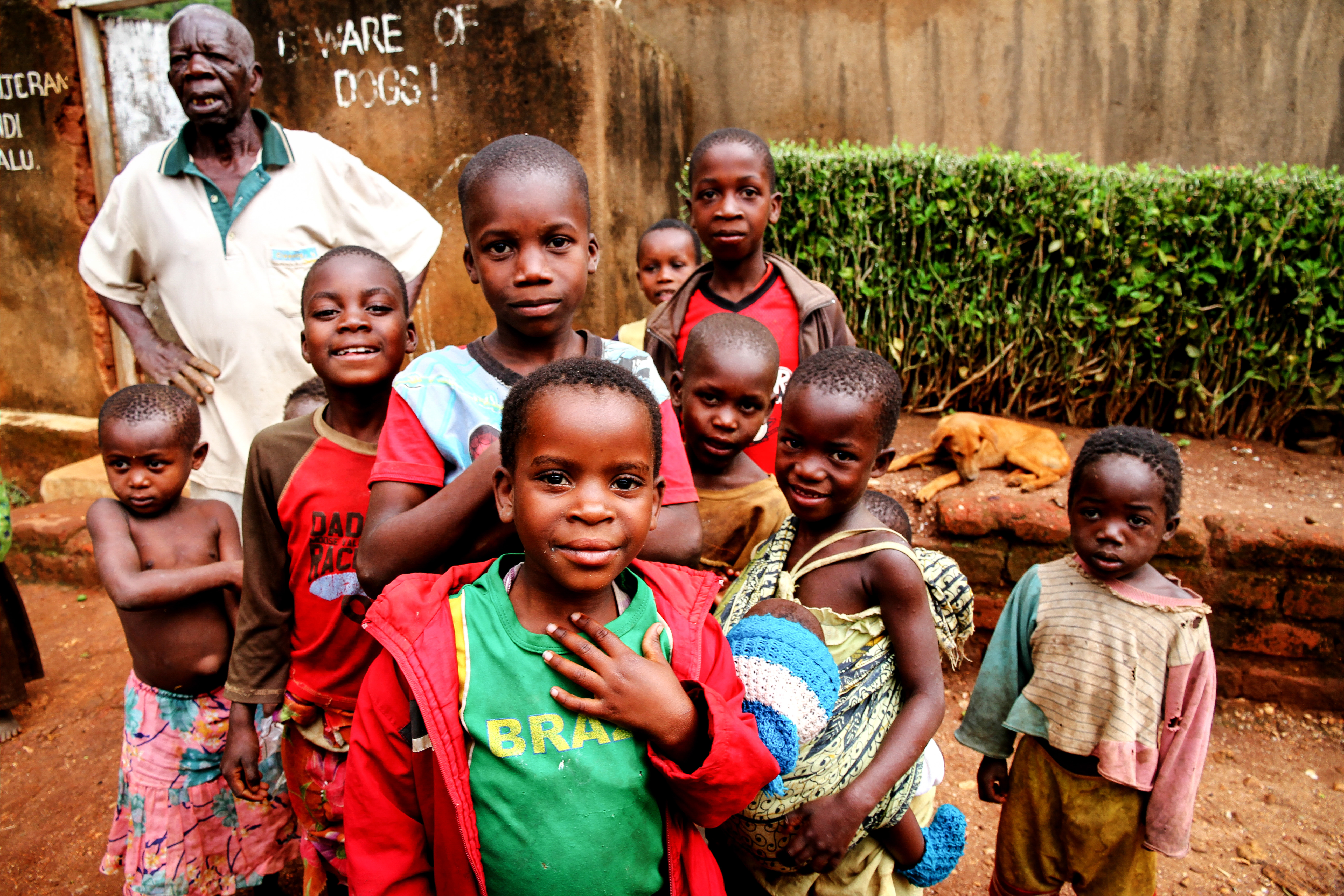
In a small brick church with a roof of straw and plastic bags a preacher speaks of heaven as being a country free from sickness and corruption. 200 metres down the road a woman sits for twelve hours in the same spot every day, hammering stones into chippings, which she sells to buy food for her grandchildren. Their parents died from Aids, and her husband is long deceased. When I ask her what the biggest problem in her life is at the moment she says “Young people. They’re not as respectful as we were when I was young.”

IMG_2888  IMG_2382_-2_-3_tonemappedb

In a local bar a government official’s son boasts about how expensive his car is. Later that night a white South African asks me whether I want to join his group, the “white people group”, because I might be “scared of all the blacks”.

In the market a dreadlocked man wearing an ‘Eat Pray Love’ t-shirt tells me that Irish people would make great Rastafarians. At a lodge a few miles away someone from England explains how he came here to volunteer organising soccer matches in an orphanage and was hired as the coach of the national football team, aged just 17.

At a public debate on corruption Victor Charles Banda from the Anti-Corruption Bureau proclaims “What I have seen is such that our government system is completely corrupt. When 10% of the population are getting richer abnormally and you are walking barefoot you should be worried.”

Mother’s Day in Malawi is a national holiday. 1 in 36 women die in childbirth here, compared with 1 in 8,100 in Ireland. A fourteen year old whose mother died in May tells me that poverty is the feeling of embarrassment when she’s talking to someone who has everything, and she hasn’t even got shoes.

When kind, tambourine-wielding Bishop E. I. Lazaro says “I hope we are of the same family because in heaven there is no skin colour”, I think it would be nice if everyone lived by those sentiments. It would be nice if the officials at the immigration office didn’t expect me to skip the queue, or if the bar down the road didn’t only turn on football matches for white people.

When I came to Malawi I brought a suitcase full of old leggings, runners, and large-sized men’s t-shirts, which I would like to believe says more about my prejudices than my terrible fashion sense. People make fun of Westerners in Africa for leaving all their good clothes at home and dressing like they’re going on safari. While packing I didn’t consider that I might end up dancing in a night club with beautiful girls in heels, or driving through Lilongwe in a convertible with a best-selling hip hop artist.

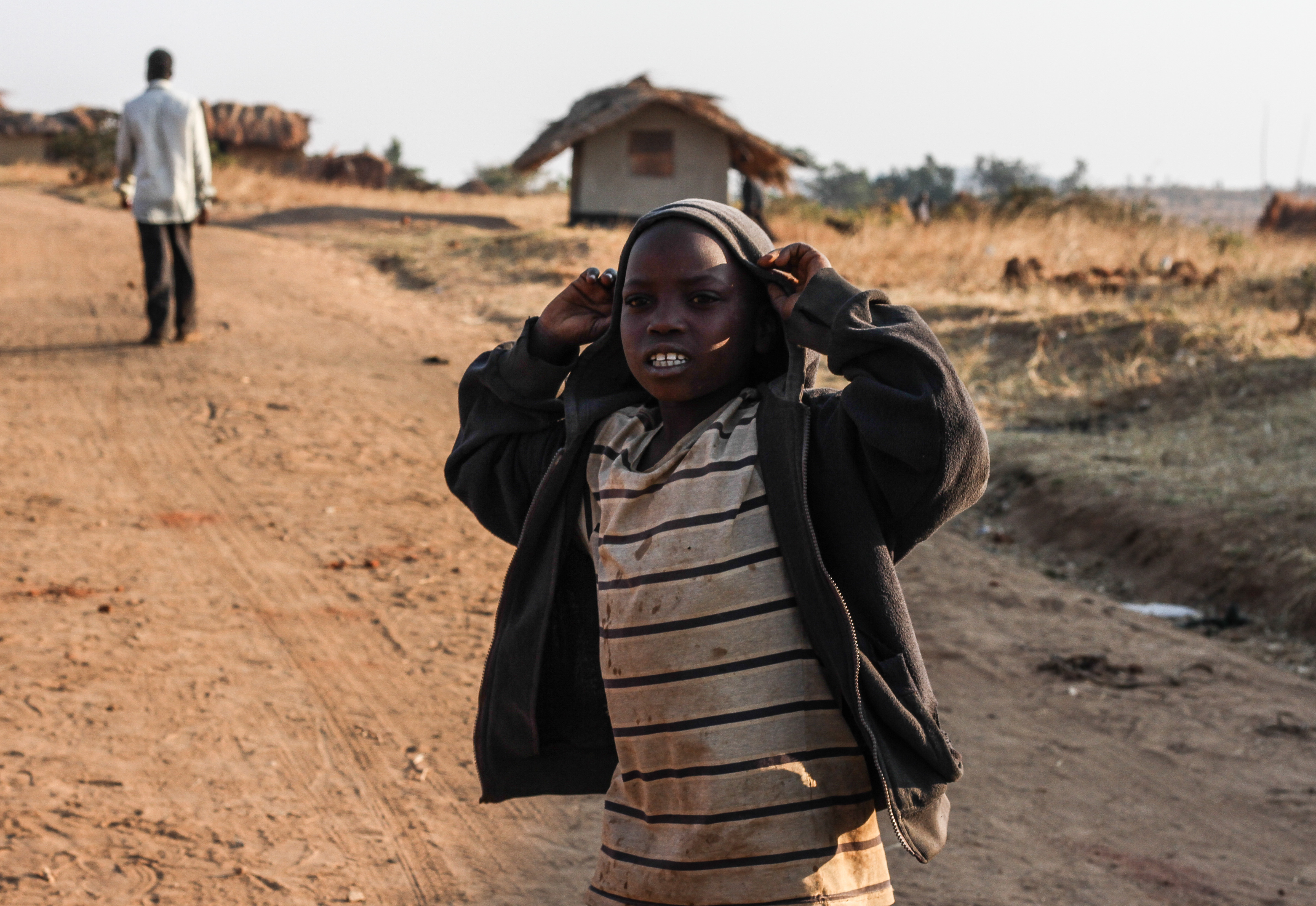
It’s hard to describe the things that exist and don’t exist in a developing country.

There isn’t an organised infrastructure. Complex improvement plans are in place, but there are several, they’re NGOs and they’re competing against each other. There isn’t transparency. It is estimated that 30% of the national budget is lost through fraud…
Read more at SimonCumbersMediaFund.ie.

Irish Aid Blog Post 1 – Sally Hayden in Malawi

One of my new friends here has joked that there should be a video game called ‘Driving in Malawi’. You would spend your time dodging goats and chickens, and on either side of the road would be smoking trenches, the kind that replace footpaths, and double up as a means of waste disposal.

Image

Malawi is incredible. This was a country that I couldn’t even begin to imagine, that barely gets a mention in histories of the continent. 694 pages of the tiny-fonted tome that is ‘The Scramble for Africa’ sees one passing acknowledgement, on page 678.

Since I arrived in the 17th least developed country in the world, two weeks after handing in my master’s thesis and completely alone, everyone has been so helpful. A presidential candidate took me to lunch, and then helped me move my luggage between accommodations, a broadcast journalist offered to share sources, and is bringing me to see his newsroom. Malawi’s biggest music festival, ‘City of Stars’, offered me a press pass. I am particularly excited to see the ‘Malawi Mouse Boys’, a four-piece band that divides their time between singing gospel music, and catching and barbequing mice, which they then sell to people on kebab sticks.

I’m talking to everyone, and learning everything from cultural niceties to political secrets. In Malawi “you’re looking really fat today” is a compliment, and calling something “Chinese” is an insult. Meanwhile, the country is still reeling from last week’s assassination attempt on government budget director Paul Mphwiyo, and fingers are pointing in all directions.

Politics dominates the discussion in all sectors of society, and the word ‘corruption’ permeates. When invisible, it is a noun to be resigned to, an immeasurable drain on development. When visible, it is a matter for huge condemnation…

Read more at SimonCumbersMediaFund.ie.

Ding, Dong, Kim-Jong is Dead

Millions watch Kim Jong-un in fearful anticipation, not least because he will be the last man with the power to reunite families that remember each other.

Along with both his father and Bertie Ahern, Kim Jong-il has that lucky knack of knowing when the right time to exit is. On the 17th December, exactly two weeks before his declared deadline of making the DPRK a “strong and prosperous nation”, the Dear Leader finally succumbed to his suffix and died. Whilst blue flashes blinded, ice exploded, storks sympathised and a holy mountain glowed, the world woke up to the fact that the hermit state was in unknown hands, and they didn’t like it.

Kim Jong-il was a known enemy. He was wildly eccentric in the way only a totalitarian dictating megalomaniac can be. A film fanatic, in 1978 he ordered the kidnapping of South Korean film director Shin Sang-ok, who, during his eight years in captivity, was charged with the creation of a North Korean Godzilla. Despite propagandist assertions of a diet of potatoes and rice-balls, his former chef claims Kim had a penchant for roasted donkey, caviar and fresh Thai papayas. The world’s greatest golfer, he shot 38 under par in his maiden round including five holes-in-one, or so attested seventeen of his bodyguards.

His hubristic behaviour could be confined to the realms of real-life comedy if one was to ignore the ground level suffering that also off-shot from it.

Google satellite pictures of the DPRK at night, and the result will be a bewildering darkness. That’s not censorship, it’s the result of no electricity. North Korea faded to black during the early 1990s. Power stations rusted. People stole electrical wire to exchange for food. And Kim Jong-il became the leader of the first industrialised country to lose the capacity to feed itself.

An estimated 500,000 to 2 million people died in the famine, a direct result of Kim’s obstinate promotion of the Juche Idea, which advocated complete self-sufficiency. His noted fearlessness in the face of international sanctions was an indication of either complete delusion or an utter absence of human compassion, as his subjects perished.

The Communist state failed with the food crisis. Many DPRK defectors noted that it was the good and loyal citizens that were the first to succumb to starvation, whilst illegal markets and small businesses sprung up out of necessity for everyone else. Even in 2011, long after the famine’s formal end, the average official monthly income was less than €2. A further €10 came in on the side, as capitalist practices are employed to keep families alive.

The increasing inequality is dashing Southern hopes of successful future reunification. The South’s economic power is at least thirty times stronger than the North’s. This is equivalent to four times the disparity that existed between East and West Berlin when the wall fell. The average North Korean is three inches smaller than their Southern counterparts due to malnourishment.

Apart from the welfare of its citizens internally, the huge international concern is in regard to the nuclear weapons held by the state. In his eulogy the songun, or “military first” policy adopted by North Korea was the most praised achievement of the elder Kim, whilst the issue of the economy was avoided in almost a “don’t mention the war” manner. Parliament chief Kim Yong-nam instead gushed that his legacy was the foundation of a “proud nuclear state”.

Pride is certainly a distinguishing factor in a personality-cult fuelled nationalistic regime. The North has conducted two nuclear tests, and could have a working nuclear missile in as little as one or two years. This poses both a threat to regional security, and supplies the DPRK with a powerful bargaining tool to use when seeking aid for its economy.

As the action rises, enter central stage a pudgy, Swiss-educated 28-year old with very little political experience, and instead of a double rainbow, a huge question-mark hanging over his head. Kim’s older sons were rejected for the leadership role, one after embarrassing his father by being arrested in a Japanese airport using fake passports to gain access to Disneyland, the other for being “too feminine”. Kim Jong-un brings new hope.

One move that should be wished for is the decriminalisation of the currently underground private economy. Another is that the younger Kim will be more willing to make concessions in international negotiations.

Both his international education and his experience as a basketball team player may make him more open to change than his father, according to the former deputy governor of the North’s Korea Reunification Development Bank. But with his uncle Jang Song Thaek supervising the transition period and the new Supreme Leader being encouraged by the rest of the military elite, this is far from a certainty.

Meanwhile millions pray to the new leader for another kind of mercy. It is likely that he will be the last man with the power to reunite estranged families that still hold memories of each other. Countless relatives were torn apart during the Korean War, and with no postal, email or telephone service between the two factions, do not know if their long-lost are still even alive.

Family reunions were agreed to at the landmark summit in 2000 and so far 20,000 Koreans have been allowed once-off face-to-face or video contact with their parents, children and siblings on the other side. Fathers have faced elderly offspring that have a lifetime of their own completed. Brothers and sisters have strained to recognise each other after sixty years apart.

Of the 130,000 South Koreans that signed up for reunions, a third have since died without satisfaction. With the war fading from memory, connections are extinguishing and the severance of Korea has reached the final stage of completion. Whether his compassion will extend beyond propagandist reportings is questionable. And so Koreans wait, like they have for sixty years.

Colm Tóibín Interview: Tell me something that you are sure is true

Prior to his appearance in UCD, novelist Colm Tóibín talks gay babies, Dana, emigration and Starbucks with Sally Hayden.

It’s not every day you get the chance to chat to one of Britain’s top 300 intellectuals. Apart from the eternal question of Rice Krispies versus Coco Pops, this was Otwo’s first notable thought this morning. Even more notable because this intellectual is most definitely Irish.

Colm Tóibín is rankled about the recent Observer list too, but for a different reason. “I thought 300 was a lot of people, and some of the other people were not very smart at all. If they had said I was one of fifty I would have been happier. They should have ranked us!”

It is twenty-one years since Tóibín wrote The South. His first novel dealt with the topics of immigration and sense of self, themes that are recurring throughout his subsequent works. It is set in Barcelona, where Tóibín himself moved in 1975, immediately after graduating from UCD. A cyclical market and an unprecedented global downturn have ensured that our generation are fleeing the fatherland just as hastily. At the recent Irish Economic Forum Tóibín called this a “tragedy.”

Whilst noting the mind-expanding benefits of spending anything from a year in Sydney to two weeks in Costa da Brava, he points out the serious detriment of the “disaster” of relocation in the longer term. “The entire business of permanent migration, of losing your roots and your relationship to the place you were brought up in, and you suddenly think twenty years later that everyone drinks in the same bar as they did twenty years ago. You think everyone at home is the same age as they were when you left, when in fact they’ve got two kids.

“Your dream of home now doesn’t equal the reality. Your entire relationship to your peer group and your family begins to dissolve and change fundamentally, and you end up a decade later coming home less and less, and having less and less connection to home.”

Upon his return to Ireland after three years he found it backward in every way. “To give you one small example, in 1978, when I came back to Dublin, there was one coffee machine in the entire city.”

Now Dubliners are besieged by the epitome of the American coffee dream itself, in the form of Starbucks and its various competitors. However for Tóibín, modern Ireland is still founding wanting. “I think in most families there’s an absolute innate racism where you learn not to say things, but if your son or daughter came home with somebody from a different race you would be very concerned about that”.

The same applies to sexuality, negative attitudes to which still lie latent, the explicitness of which, according to Tóibín, we’ve learnt to “disguise”. “There’s no overt homophobia in political discourse, or the newspapers, or on radio, but it doesn’t mean that anybody longs to have a gay baby.”

Tóibín’s laugh is as infectious as his books are miserable. During our brief time talking Otwo chuckled, giggled, chortled and guffawed. His latest work is a film script. “I can’t write comedy. This really was a comedy, I swear to you. But I looked at it yesterday and thought ‘we’ll have to get sad music for it now.’”

As a patron and producer of the arts, he is delighted about the recent election of Michael D. Higgins to the Presidency. “He is stylish, he is cultured, he is articulate, and as he said himself, being old was not a secret he was keeping. So [I’m] very pleased with the result, I think he’s a most civilised human being. Perhaps more civilised than most of the people who elected him.”

Having said that, he did wonder if these voters deserved Dana instead. “I think it was a good idea to accuse Martin McGuinness of something, but it was hard to think up of the others. Dana had American nationality, who cares? Mary Davis was on some state board. Yeah, well, I’m on the Arts Council, I was appointed by Fianna Fáil. They needed someone competent, they appointed me. She didn’t defend herself enough by saying ‘would you shut up’.”

Sensing a prime chance to shape the political future of Ireland, Otwo slyly suggests President Tóibín for 2018. “You think I would tour around the country telling everyone that I thought I had qualities that were presidential? I think self-deprecation is actually fundamental to citizenship. I would hate the National Ploughing Championships. I would hate getting into wellies!”

Three times a Booker Prize potential, Tóibín also has no interest in the “theatre of cruelty” that are awards ceremonies. “I actually knew Anthony Burgess, and he wouldn’t go to the Booker ceremony unless he was sure he had won. It was that year that his wonderful novel Earthly Powers was beaten by some novel by William Golding, and Burgess just said ‘why does anyone think I’m just going to go and travel all the way over from Monaco and sit there and not win?’”

Though never previously renowned as a breeding grounds for British intellectuals, with the year of the Queen, the times they are a-changing. “UCD is a great place. I kneel down every morning and thank God I didn’t go to Trinity.”

Otwo tells Tóibín to not give up on the comedy.

Colm Tóibín will speak to UCD’s English and Literary Society on Wednesday 23rd November in Theatre O (Newman Building) at 6:30pm

Tibetan Buddhist Monk to Conduct Workshop

Published on the 5th July 2010 by the Santa Barbara Independent

Khenpo Tsering Samdup, a Tibetan Buddhist monk, will return to Santa Barbara to conduct a weekend program entitled “A Friend in the World: The 37 Practices of a Bodhisattva.” According to the advance publicity, he will explores how the Bodhisattva ideals of compassion and loving kindness can transform our lives and the lives of others.

khenpo is a Buddhist scholar who has studied the Buddha’s teachings for anywhere from nine to 15 years. Khenpo Tsering Samdup began his training at the Shri Karma Nalada Institute on the border of Tibet, now part of India, and in 1990 received the degree of acharya, which is characterized as the equivalent of a PhD in Buddhist philosophy. In 2002 he was appointed the headmaster of Shri Diwakar Vihara Buddhist Institute in Kalimpong, India, and he also continues to teach throughout Southeast Asia, Europe, and America.

“Khenpo Tsering combines a rare blend of great humor, kindness, and superior knowledge that make meeting him a pleasure and learning from him an experience,” said Dawa Tarchin Phillips, resident teacher of the Bodhi Path Buddhist Center of Santa Barbara, in a written statement. ”Santa Barbara benefits from his visits and lectures especially in times like these when people are looking for answers that offer alternatives to existing ideas.”

4-1-1: The weekend course is scheduled on Friday, July 9, from 7 to 9 p.m., and Saturday and Sunday, July 10 and 11, from 9:30 a.m. to 12 noon and 2 to 5 p.m.. It will take place at the Bodhi Path Buddhist Center, 30 West Mission Street, #7. The fee is $100, or $25/session, and everyone is welcome. For information or to preregister, call (805) 252-6137, or visit the Bodhi Path Buddhist Center Web site.

Internet Photo Gallery Raises Money For Haiti

Published on the 29th June 2010 by the Santa Barbara Independent


Printsforhaiti.com has donated $5,000 to Direct Relief International, funds that were all raised from its Internet photo gallery sale.

Founded following the earthquake by Santa Barbara-based Specialty Color Services and Greg Lawlor, the special collection consists completely of donated photographs.

These currently include award-winning Western art and horse photography by Norm Clasen; several contributions by Amit Gupta, the founder of Photojojo; and a single edition of the iconic “Suzanne” by Joyce Tennyson. Discount codes on the site are designed to make purchases possible at any budget. Once purchased, museum-quality archival silver-halide prints are produced by Specialty Color Services, a custom photo lab, and shipped to the buyer.

In a written statement, Lawlor, a photographer and technology solutions consultant, said, “Our next donation will be allocated to the American Red Cross. We hope that people will continue to support our effort. There is still a massive amount of recovery work to be done. The great thing about this project is that contributors have the opportunity to build a beautiful collection of photography for themselves at very reasonable prices while helping others.

The earthquake in Haiti occurred on January 12, 2010, after which the International Federation of Red Cross and Red Crescent Societies estimated that 230,000 people died while as many as one million people were made homeless.

The Berry Man and McConnell’s Join Forces


Published on the 29th June 2010 by the Santa Barbara Independent 

The Berry Man, Inc. is now distributingMcConnell’s ice cream out of its two distribution centers in Santa Barbara and San Luis Obispo.

Jim McCoy, owner of McConnell’s Ice Cream — a Santa Barbara fixture for the last 47 years — stated, “I remember when [Berry Man owner Guy De Mangeon] used to rent space from me. He had one truck and one employee. I would never have guessed that 20 years later I would be sitting across from him in his office pitching my products, but there we were. Life is funny like that.”

“It’s a sweet partnership anyway you look it,” said De Mangeon, owner and president of The Berry Man, Inc. “I thought it was a great idea from the moment Jim mentioned it. McConnell’s delivers two days a week but I deliver seven and I’m already going to most of the places Jim sells his product…It’s a win-win for everyone involved.”

UCSB Charity Yard Sale Breaks Record

Published on the 29th June 2010 by the Santa Barbara Independent

UCSB project GIVE will donate a record-breaking $27,000 to various Isla Vista non-profit and community organizations at a ceremony on Friday, July 2, following the organization’s 20th annual sale held June 19 and 20.

Catherine Boyer, the Isla Vista/UCSB liaison, described GIVE as an initiative that encourages students to donate their unwanted items rather than discard them. As students moved out of their apartments, condos, houses, and residence halls earlier this month to embark on summer holidays, the GIVE staff and volunteers accepted donations of clothing, books, furniture, kitchenware, household goods, electronics, bicycles, and other miscellaneous items and sold them over the weekend at Embarcadero Hall in Isla Vista.

Some of the beneficiaries of the sale will be the Isla Vista Elementary School Latino Parent Night, Science Camp Scholarship Fund, and Viva el Arte; as well as the Isla Vista Recreation & Park District’s Adopt-a-Block program, Isla Vista Teen Center, Isla Vista Youth Projects, IV Arts, the Olive Tree Initiative, the Optimist Club at UCSB and the Breakfast Optimist Club of Goleta, St. Brigid Fellowship, St. Michael’s University Church, Santa Barbara Student Housing Co-op, and the Business Club Youth Outreach Program at UCSB.

The major sponsors of GIVE include the Isla Vista/UCSB Liaison Office, the Isla Vista

Tenants Union, Associated Students Community Affairs Board,UCSB Housing and Residential Services, and the Environmental Office at UCSB. Additional support is provided by Associated Students Recycling, County of Santa Barbara Resource Recovery &Waste Management Division, Isla Vista Recreation & Park District Adopt-a-Block, Isla Vista School Afterschool Grant, MarBorg Industries, Society of St. Vincent de Paul, UCSB Community Housing Office, UCSB Office of Student Life, UCSB Parking Services,UCSB Physical Facilities, and UCSB and community volunteers.

Highway 154 Roadwork to Slow Traffic

Published on the 28th June 2010 by the Santa Barbara Independent

A $1.5 million repaving project will begin on Wednesday, June 30, on a section of Highway 154 between Stagecoach Road and Highway 101.

According to a Caltrans spokesperson, work will take place overnight — 8 p.m. to 6 a.m. — from Sunday to Friday morning. Motorists can expect delays of up to 20 minutes, said the spokesperson, and there will be one-way traffic control present to aid movement through the area. All businesses and attractions in the Santa Ynez/Santa Barbara area will remain accessible via Highway 154, which will stay open at all times throughout construction.

The project is to be carried out by Granite Construction of Goleta, which expects it to be completed by the end of August.

For traffic updates on other state highways in Santa Barbara County, motorists can call Caltrans District 5 Public Affairs at (805) 549-3318 or visit the District 5 website.

Construction to Slow Airport Vehicle Traffic

Published on the 22nd June 2010 by the Santa Barbara Independent

Traffic on Fairview Avenue between Hollister Avenue and James Fowler Road will be slower than usual as the Goleta Sanitary District begins a six month-long sewer line replacement project this week. According to a spokesperson with the Santa Barbara Airport, near where the construction will be taking place, the project will include the installation of a new trunk sewer main, with construction taking place on weekdays between 7 a.m. and 5 p.m. with some night work as well.

Vehicles driving into the Airline Terminal (at 500 James Fowler Road) will be subject to 1-5 minute delays each way, said the spokesperson. To avoid delays while traveling northbound on Highway 101, it is suggested that passengers and other visitors heading to the Airline Terminal use Highway 217, taking the Sandspit Road exit onto Moffett Place.

With passengers, airline terminal employees, rental car turn-arounds, parking lot shuttles, taxis and Goleta Beach visitors, this stretch of road is already very busy, and alternate routes and avoiding the area are advised whenever possible, said the spokesperson.

Passengers are also advised to arrive earlier than the usual (two hours prior to flight departure time) if they plan to use Long Term Parking Lot 2 off Hollister Avenue, as the complimentary airport shuttle travel time to the airline terminal will be affected by the construction